Understanding the Application Packaging Process
Successful enterprise application deployment requires more than simply installing software. Applications must be properly assessed, packaged, customized, tested, and prepared for reliable deployment across managed enterprise environments.
Application Packaging is a structured process that transforms software installers into standardized, manageable, and deployment-ready application packages.
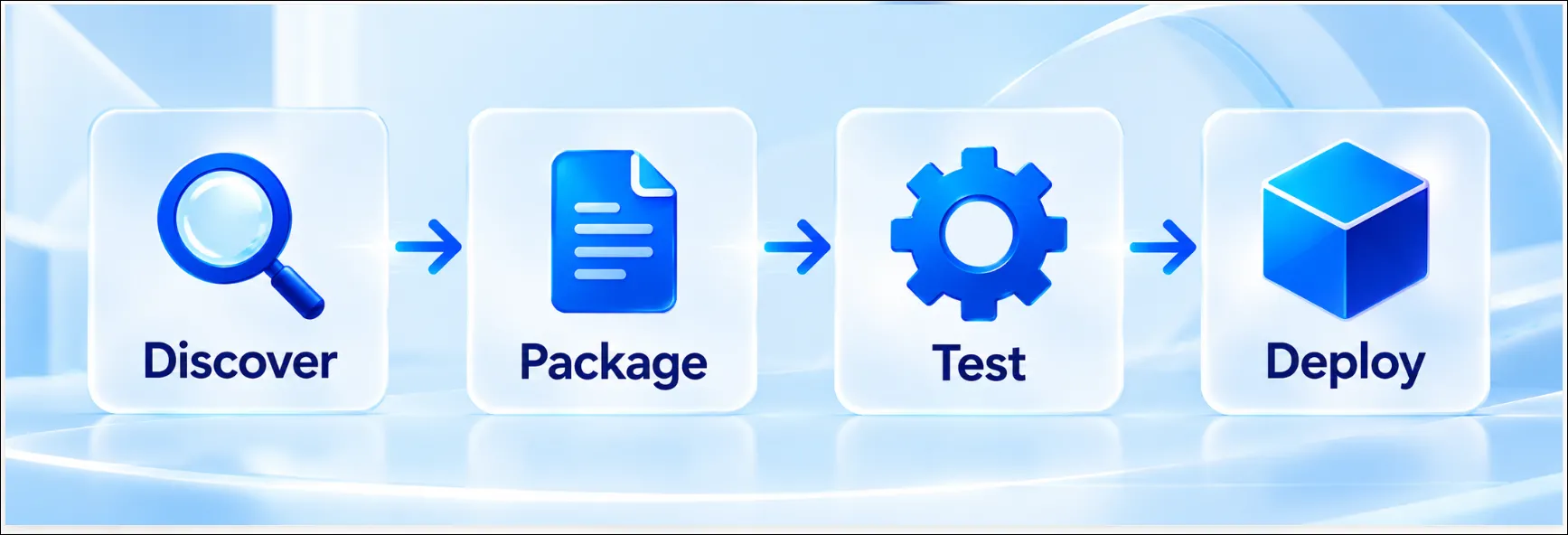
At APP Packagers, we follow a systematic approach covering the complete application packaging lifecycle, from Application Discovery and Technical Assessment to Packaging, Testing, and Deployment Readiness.
Key Stages of the Application Packaging Process
1. Application Discovery & Technical Assessment
The process begins with understanding the application’s technical requirements, installation behaviour, dependencies, and compatibility.
Key activities include:
- Analyzing MSI, EXE, scripts, and other installation sources.
- Identifying dependencies, runtimes, services, and drivers.
- Reviewing installation and uninstall commands.
- Assessing operating system compatibility and installation context.
- Identifying configuration requirements and potential deployment risks.
Outcome: A clear technical blueprint for packaging and deployment.
2. Application Packaging & Customization
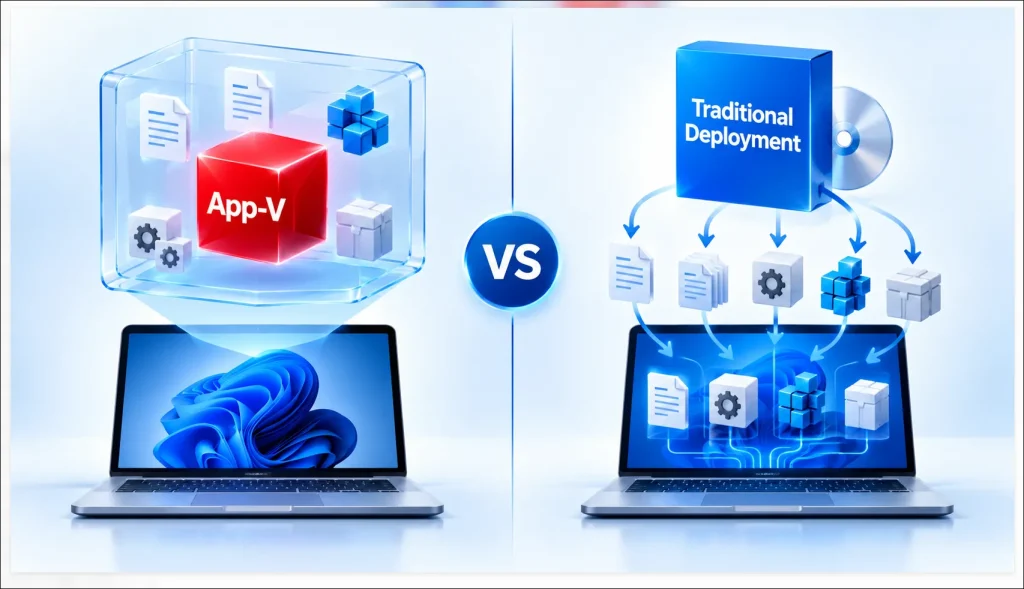
Based on the technical assessment, the appropriate packaging technology is selected, such as MSI, MSIX, App-V, PSADT, or Intune Win32 packaging.
Packaging activities may include:
- Creating or converting application packages.
- Configuring silent installation and uninstallation.
- Applying registry settings, files, shortcuts, and custom configurations.
- Integrating required dependencies and prerequisites.
- Standardizing application installation behaviour.
Outcome: A customized, enterprise-ready application package.
3. Application Testing & Quality Assurance
Before deployment, application packages undergo structured testing to validate installation, functionality, and compatibility.
Testing includes:
- Silent installation and uninstallation.
- Application launch and basic functionality.
- Dependency and configuration validation.
- Upgrade and repair testing, where applicable.
- Compatibility and deployment-readiness checks.
Outcome: A validated application package with documented test results.
4. Application Remediation & Optimization
Applications that encounter packaging, installation, or compatibility issues require further investigation and remediation.
Activities may include:
- Resolving installation failures.
- Correcting registry or configuration issues.
- Addressing missing dependencies.
- Optimizing installation scripts and package behaviour.
- Retesting corrected application packages.
Outcome: A remediated and optimized package ready for final validation.
5. Application Deployment Preparation
Once validated, applications are prepared for enterprise deployment through management platforms such as Microsoft Intune and Microsoft SCCM/MECM.
Deployment preparation includes:
- Configuring installation and uninstall commands.
- Creating detection and requirement rules.
- Defining dependencies and return codes.
- Configuring deployment settings.
- Validating deployment on representative managed devices.
Outcome: A deployment-ready application package.
Benefits of a Structured Application Packaging Process
- Reduced Deployment Failures: Identify packaging and configuration issues before rollout.
- Consistent Installations: Standardize software installation across enterprise devices.
- Improved Compatibility: Assess and address application-related technical risks.
- Simplified Management: Support centralized application deployment and maintenance.
- Reduced IT Support Effort: Minimize avoidable installation and configuration problems.
- Faster Deployment Readiness: Streamline packaging and validation through repeatable processes.
How APP Packagers Can Help
APP Packagers provides professional Application Packaging Services to help organizations manage the complete application packaging lifecycle.
Our expertise includes Application Discovery & Technical Review, MSI Packaging, MSIX Packaging, App-V Packaging, PSADT Packaging, Microsoft Intune Packaging, SCCM/MECM Packaging, Application Testing, and Deployment Readiness.
Whether you need to package a single application or manage thousands of enterprise applications, our specialists help deliver standardized, tested, and deployment-ready application packages.
Conclusion
A successful application packaging process begins with detailed discovery and ends with a validated package ready for enterprise deployment.
By following a structured approach to Discovery, Packaging, Testing, Remediation, and Deployment Preparation, organizations can reduce deployment risks, improve application reliability, and simplify software management.
APP Packagers helps organizations transform complex application installers into reliable enterprise-ready packages.